
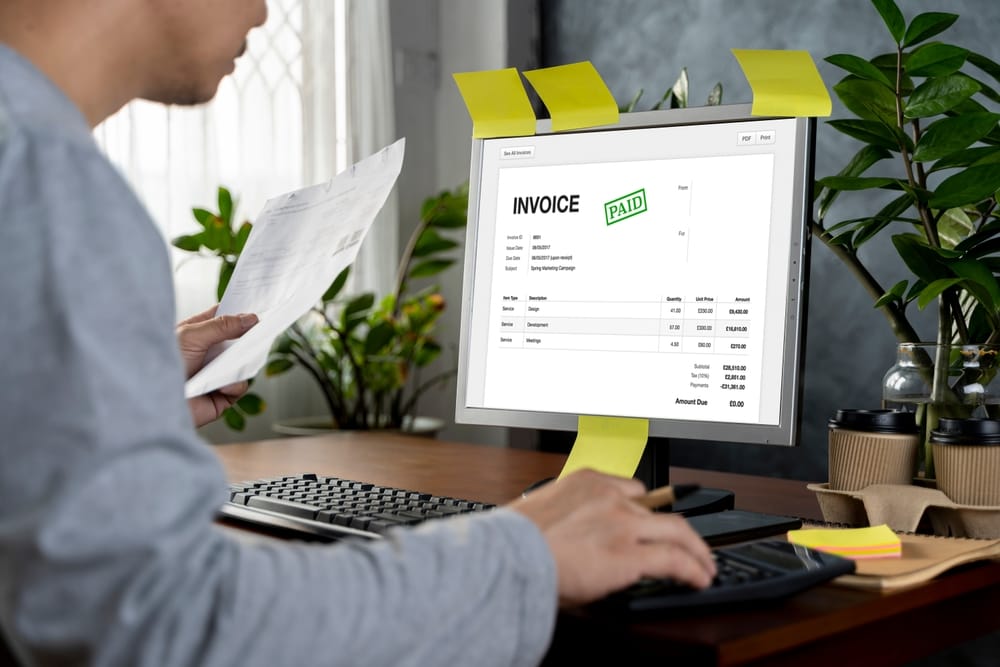
You've done the work. The project is delivered, the product is shipped, the service is rendered. Now what?
For many freelancers, small business owners, and independent professionals, the answer is uncomfortable: you wait. You hope. You follow up awkwardly. Maybe you send a text that says "Hey, just checking in about payment..." Maybe you scribble an amount on a piece of paper and hand it over. Maybe you just trust that the money will come.
This is exactly where things go wrong, and exactly why invoices exist.
An invoice isn't just a piece of paper with a price on it. It's a professional, legal, and financial tool that protects your business, gets you paid faster, and keeps your records clean. Let's explore why creating proper invoices matters, what problems they solve, and what happens when you skip them.
The Real Problems Invoices Solve
1. "I Did the Work, But I Never Got Paid"
This is the single most common reason people start invoicing. Without a formal record of what was agreed upon, delivered, and owed, you have no leverage. A verbal agreement is easy to forget, easy to dispute, and impossible to enforce.
If a payment dispute ever arises, or worse, if you need to involve a lawyer or collections agency, an invoice is your first line of evidence. Without one, you're starting from zero.
2. "My Client Forgot to Pay Me"
It happens more often than you'd think, and it's rarely malicious. Your client is busy. They have 40 other things on their plate. They fully intend to pay you, they just forgot.
A professional invoice puts your payment on their radar. It's a clear, documented request with a specific deadline. And when that deadline passes? You have a legitimate reason to follow up. You're not "nagging", you're referencing an official document with a due date.
Modern invoicing tools let you send automated payment reminders, so you never have to write that awkward follow-up message yourself.
3. "I Don't Know Who Owes Me What"
Once you're juggling more than a handful of clients, tracking payments in your head, or worse, in a spreadsheet you update "when you remember", becomes unsustainable.
Invoice Tracking Benefits
Invoices give you a single source of truth: which clients have paid in full, which payments are partially completed, which invoices are overdue, and how much revenue is outstanding at any given moment.
This isn't just nice to have. It's the difference between knowing your actual financial position and guessing.
4. "Tax Season is a Nightmare"
Every year, millions of self-employed professionals scramble to reconstruct their income history from bank statements, text messages, and memory. The result? Missed income, overpaid taxes, or worse, an audit with nothing to show.
When you invoice consistently, you build a chronological, itemized record of every dollar earned. Come tax season, you don't need to reconstruct anything. Your accountant will thank you. Your future self will thank you even more.
5. "I Look Unprofessional"
First impressions matter, and so do lasting ones. Telling a client "just Venmo me $500" communicates something very different from sending a branded invoice with your logo, itemized line items, and clear payment instructions.
"Professional invoices signal that you run a legitimate operation, take your work seriously, and you've done this before."
For freelancers especially, perception is everything. A polished invoice elevates you from "person I hired off the internet" to "professional service provider I want to work with again."
6. "I Keep Undercharging (and I Don't Even Realize It)"
When you don't itemize your work, it's easy to lose track of what you actually delivered. You quoted $2,000 for a project, but you ended up doing three rounds of revisions, two additional features, and a weekend of support calls. Without a detailed invoice, you absorb that extra work invisibly.
Invoicing forces you to break down your deliverables. When you see five line items on an invoice instead of two, you start to recognize the true scope of what you provide, and you charge accordingly the next time.
The Hidden Benefits of Consistent Invoicing
Beyond solving immediate problems, invoicing builds long-term advantages that compound over time.
Financial Clarity
When every transaction has an invoice, you can answer questions like:
- What was my revenue last quarter?
- Who is my highest-value client?
- Which services generate the most income?
- What's my average invoice value?
These aren't theoretical questions. They're the foundation of every smart business decision you'll make, from pricing changes to hiring to knowing when to fire a bad client.
Legal Protection
In most jurisdictions, an invoice is a legally recognized document. It serves as proof of a transaction, proof of agreement on price, and proof of delivery. In the event of a contract dispute, non-payment claim, or tax audit, your invoices are evidence.
Some industries and countries legally require you to invoice. Even where it's not mandatory, having proper records protects you in ways that verbal agreements never can.
Cash Flow Management
Cash flow, not profit, is what kills small businesses. You can be profitable on paper and still run out of money because payments are trickling in unpredictably.
Add payment reminders and overdue tracking, and you're actively managing cash flow instead of reacting to it.
Client Relationships
Counterintuitively, invoicing actually improves client relationships rather than making them transactional. Here's why:
- Transparency , clients see exactly what they're paying for, which builds trust
- No surprises , clear line items prevent "I didn't agree to that" conversations
- Professionalism , clients feel confident working with someone who runs a tight operation
- Boundaries , an invoice with a due date sets healthy expectations about payment timing
The freelancers and businesses who struggle most with client payments are typically the ones who feel uncomfortable asking for money. An invoice removes the personal awkwardness. You're not asking, you're documenting.
Who Needs to Create Invoices?
The short answer: anyone who gets paid for goods or services.
But let's be specific:
- Freelancers , designers, developers, writers, consultants, photographers, videographers
- Small business owners , agencies, shops, repair services, salons, tutors, coaches
- Independent contractors , construction, plumbing, electrical, cleaning, landscaping
- Professional services , lawyers, accountants, architects, engineers
- Creatives , artists, musicians, event planners, caterers
- E-commerce sellers , handmade goods, custom products, wholesale orders
- Property managers , rent invoicing, maintenance charges
- SaaS providers & digital agencies , retainers, project fees, monthly subscriptions
If money changes hands for work done, an invoice should exist.
What Happens When You Don't Invoice?
Let's paint the picture honestly:
| Without Invoices | With Invoices |
|---|---|
| You forget who owes you what | Every receivable is tracked with a status and due date |
| Clients "forget" to pay , and you have no proof | You have a dated, itemized record you can reference or escalate |
| Tax time means days of reconstructing your income | One click for a full revenue report |
| You look like an amateur | You look like a professional who values their work |
| Scope creep goes unnoticed | Every deliverable is documented and priced |
| Cash flow is unpredictable | You can forecast income based on outstanding invoices |
| Disputes become "your word vs. theirs" | Disputes reference a clear, agreed-upon document |
| You undervalue your own services | Itemized breakdowns reveal the true worth of your work |
The Old Way vs. The Modern Way
Historically, invoicing meant Word documents, Excel templates, manual calculations, and praying your email attachment didn't land in spam. It was slow, error-prone, and ugly.
Modern invoicing tools have changed everything:
The barrier to invoicing properly has never been lower. There's no longer a valid excuse for not doing it.
Getting Started is Easier Than You Think
If you've been putting off proper invoicing, sending informal texts, relying on handshakes, or tracking payments in your head, to stop.
You don't need accounting software. You don't need a finance degree. You need a tool that lets you:
Add your business details once
Set up your company information, logo, and payment preferences.
Create a clean, professional invoice
Build invoices in a few clicks with pre-filled templates.
Send to your client instantly
Deliver via email, shareable link, or WhatsApp message.
Track payment status
Monitor which invoices are paid, pending, or overdue.
Follow up automatically
Set automated reminders for overdue payments.
That's it. That's the entire workflow. And it transforms how you get paid.
The Bottom Line
Invoices aren't bureaucracy. They aren't red tape. They're the mechanism that turns your hard work into actual money in your account.
Key Takeaways
Every time you skip an invoice, you make it easier for someone to "forget" to pay you Professional invoices protect you legally and financially while setting clear expectations Modern invoicing tools make the process effortless and professional Taking control of your cash flow starts with proper documentation
The work is already done. You deserve to get paid for it, clearly, promptly, and professionally.
Start creating professional invoices today with ColorInvoice →
ColorInvoice is a free invoicing platform for freelancers and small businesses. Create, send, and track professional invoices in minutes, no accounting degree required.
Ready to upgrade your billing experience?
Stop sending generic PDFs and maintain your brand identity down to the final receipt.
Start your 5-day free trial